
Top 10 Tips To Help You Determine How Often You Should Check For PAT in Rugeley
The UK's health and safety laws make it difficult for duty holders to determine the right frequency of Portable Appliance Testing. Contrary to widespread misconception, there is no mandated statutory interval–such as an annual requirement–specified in the Electricity at Work Regulations 1989. Regulation 4(2) instead imposes an obligation to maintain electrical systems in order to prevent danger. This legal duty is placed on the employer or the responsible person who must establish a maintenance regime that is suitable through a structured assessment of risk. Health and Safety Executive's (HSE) risk-based testing approach is a departure from the blanket schedules and calls for a rationale and documented justification of all inspection and test intervals. It is important to determine the frequency by evaluating equipment type, operating environment, users and previous history. This makes PAT scheduling more dynamic than a calendar-based, passive compliance exercise.
1. Risk Assessment Is the Absolute Primeval Factor
The frequency for testing is not dictated by law. However, the dutyholder must conduct a sufficient and appropriate risk assessment. This document is the basis for your PAT test regime. The assessment should take into consideration all factors that might cause an appliance or device to become unsafe and then determine the frequency of testing and/or inspection to mitigate this risk. HSE inspectors will look for this assessment, and they will compare it to the conclusions. It is essential to any testing schedule. Without it, the schedule will be arbitrary and non-compliant.
2. Key Factors Influencing Testing Intervals
For a reasonable frequency of testing, a risk assessment will evaluate several core elements. These include: Type of Equipment: Class 1 appliances (e.g. toaster ovens, kettles), which are earth-dependent, require more frequent checks than Class 2 (double-insulated appliances). Environment: A harsher environment (such as on a building site, in a workshop, or in a commercial cooking area) calls for more frequent checks. Users: If the equipment is being used by a trained employee, it may need to be tested less frequently than if it's being used by a public or untrained personnel. Appliance Construction: Robust equipment may be lower risk than equipment with a flexible cable that is prone to damage. Previous History: Appliances that have a history of faults require more frequent maintenance.
3. The importance of formal visual inspections
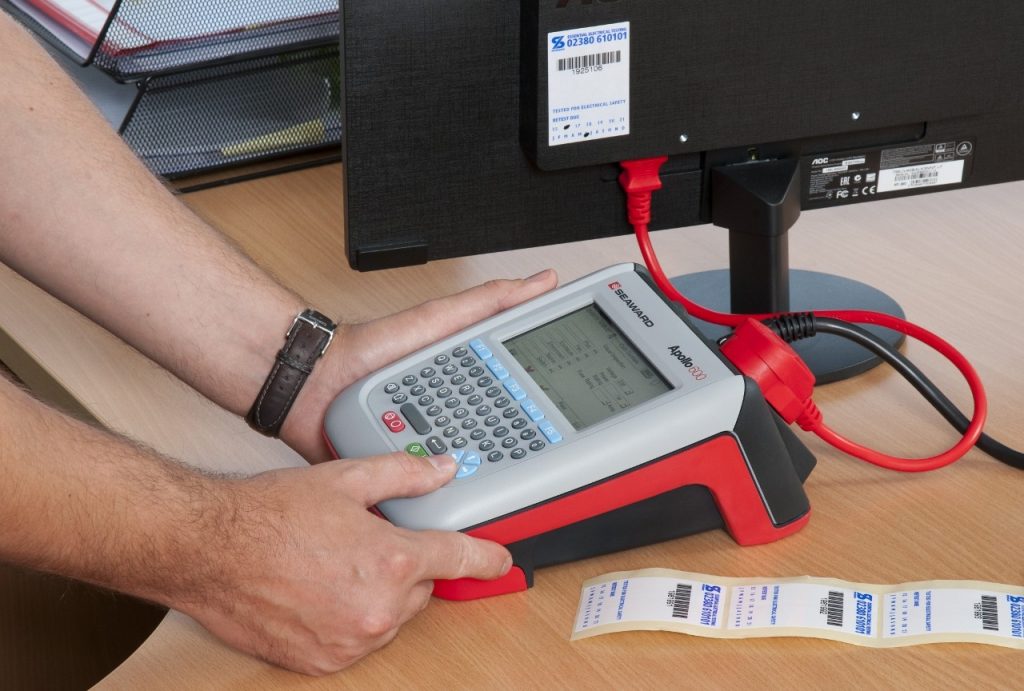
Formal visual checks are part of a maintenance regime that is legally valid and often more important than combining inspections and tests. They can detect the majority of faults such as cable damage and loose plugs. A competent person can perform a formal visual check on many low-risk devices in low-risk environments, such as a computer desktop in an office. Electronic testing may not be necessary. Risk assessments also determine how often these formal visual tests are performed.
4. User Checks and First Line Maintenance
User checks are the first line in defence before any formal process. The dutyholder must ensure users are encouraged to perform a basic pre-use visual check for obvious signs of damage, such as frayed cables, burn marks, or loose parts. Even though it's not recorded in the formal PAT systems, promoting an awareness culture among users is important for a holistic risk based approach. It can also help identify any problems that may arise between scheduled formal checks.
5. Code of Practice of IET – Guidance
The IET Code of Practice, while not a law, provides valuable advice on the recommended frequencies for initial equipment. The table provides a detailed list of recommended intervals for various equipment types and environments (e.g. commercial, industrial, or public). The table can serve as a starting point in the risk assessment of duty holders. For example, it might suggest 3-monthly visual inspections for equipment on a construction site but 24-monthly intervals for IT equipment in an office. These initial recommendations will be revised based on the actual experience.
6. The concept of "Result Based Frequency Schedules"
To be compliant and truly sophisticated, you should adjust future testing frequencies in accordance with the results of past tests. If a certain appliance, or a specific category of appliances, passes all tests consistently over many years, the risk analysis can be reviewed and extended. If an appliance or a category of appliances fails its tests frequently, it is better to shorten the testing interval. Enforcement authorities view this dynamic, evidence-based method very favorably.
7. New Appliances and Equipment
One common myth is the idea that new equipment should not be tested. It may not require a formal combined testing before the first use but a visual inspection will still be required to check the equipment for transit damage, the correct wiring of the plug and its suitability for the UK (e.g. a properly fused plug). The risk analysis will determine when to test new equipment. It will be integrated into the maintenance schedule.
8. Hired or Borrowed equipment
The PAT system must include any equipment brought into the premises. This includes hired tools and equipment used by contractors. It is the dutyholder's responsibility to make sure that it is safe for use before using. It is common for risk assessments to be conservative. This means that they require a formal inspection and test before it can be used on site.
9. Documenting the Reasons for Frequency Selection
Documentation is a good way to show compliance. The risk assessment document must include both the frequency and the rationale for the choice of appliance. This document serves as proof of "due diligence." It should reference the factors considered (environment, user, equipment type) and, where applicable, refer to the IET Code of Practice or the results of previous testing history to justify the interval.
10. Regular Review & Adjustment of Intervals
Documents like the risk assessment or the frequency of testing that it prescribes are dynamic. Regulation 4 of 1989 Electricity at Work Regulations requires that maintenance be carried out continuously. The dutyholder shall review the testing intervals and risk assessment on a periodic basis (e.g. every year) or in response to any significant change. This will ensure that the system is effective and proportionate. Read the top Rugeley EICR inspections for more tips.
Top 10 Tips For Quick Response Time To Fire Extinguisher Service in Rugeley
The speed of response is crucial to keeping legal compliance when it comes to fire safety. According to the Regulatory Reform Order (Fire Safety) 2005, firefighting equipment must be kept in a satisfactory working condition. Any time where equipment is damaged, not functioning or is discharged is a breach of duty. To minimize your risk exposure as well as to ensure insurance coverage and ensure operational continuity, a provider must be able to respond to emergency request and planned demands promptly. The slow response can lead to buildings being unprotected, or disrupting the business process. It also demonstrates the lack of due diligence. To determine a company's capability to respond to emergencies, from routine scheduling to emergency calls, it is crucial to know the various services, geographic restrictions and contractual guarantees, as well as the operational capabilities that allow for swift and effective actions.
1. Scheduled Service appointment Lead Times in Rugeley
The capacity of a service provider to schedule routine annual services efficiently is the most reliable indication of their expertise. A company that is organized will call you about 4 to 6 months prior to the expiration date of your certificate to arrange your next appointment. They should provide flexible scheduling options and give a specific time slot or a confirmed date for the engineer's visit. The excessively long lead time (e.g. needing to make reservations three months or more in advance) or an inability to offer a definitive date can indicate understaffing, poor resource management, or excessive extension, which could lead to a lapse in your certification coverage.
2. Definitions and Tiers for Emergency Callout Response
All reactive callers are not made equal. Trustworthy providers have clearly defined tiers of emergency response, each with associated time guarantees. Basic urgent needs, such as the absence or malfunction of an extinguisher (for instance), may have a time-frame of 24 to 48 hours. If there is a serious emergency (e.g. several units are removed due to an incident that is minor or a major fault is found during a audit), a rapid response should be given often within a matter of hours. To manage expectations in the contract or service agreement should explicitly define these categories along with their intended time for response.
3. Geographical coverage and local engineer availability in Rugeley
Response times are directly tied to the Rugeley. A national firm may have a large brand name however, it is dependent on local engineers from a network. Importantly, you need to know if there are engineers in your locality or if the engineers travel quite a distance. This can affect the time to respond for scheduled services and in emergency circumstances. A provider with a dense network of local engineers will typically respond faster and with less call-out costs. Always ask "Where is your nearest engineer to the postcode we have?"
4. Guaranteed Response Timelines in Service Level Agreements (SLAs) in Rugeley
Response times are only important if they're formally stipulated by the Service Level Agreement. An unsubstantiated "attend promptly" guarantee is of no value. A solid SLA will contain tangible and relevant Key Performance Indicators (KPIs), such as: "We will acknowledge a service request within 2 working hours" and "We will arrive on site to address a high-priority emergency within 4 hours." These guarantees provide recourse in case your provider is unable to meet the obligations under the contract.
5. Communication Protocols, Helplines Dedicated to the Cause and Other Resources in Rugeley
The speed of response depends on the efficiency of communication. It is essential to know the provider's procedure for responding to service requests. Does the service have a customer support hotline or email address for urgent inquiries? Are they monitored during normal business hours as well as outside of them? It is important to choose an organization that has an immediate telephone line that is staffed by an administrator. They will then send an engineer as quickly as possible, rather than being tucked away in a phone queue.
6. Support for Weekends and After-Hours in Rugeley
Fire incidents and faults do not respect 9-to-5 working hours. Access to support is essential in high-risk environments including 24/7 manufacturing facilities, data centers, and care homes, or after an incident that happens outside normal hours. It is important to determine if the provider has an emergency response service that is available 24/7 or is available only during working hours. If the provider does offer emergency assistance after hours, inquire about the cost of premium services and response times guaranteed in these cases. They could be vastly different from the SLA for support during the daytime.
7. Fault Resolution vs. Initial Attendance Time
A distinction must be drawn between the reaction time at first (an engineer team arriving at the site to investigate an issue) in contrast to the time frame for resolution of fault (the moment the equipment was completely repaired, replaced or compliant). It is possible for a service provider to react quickly and condemn the malfunctioning fire extinguisher but it can take some time to find and install the replacement. Your SLA must address both of these metrics. Idealy, the provider should be able to solve typical issues in the first day of their visit like the absence of an extinguisher. They can do this by having common replacement units within their van.
8. The impact of delays in response on Compliance and Insurance in Rugeley
Understanding the consequences of slow response time is critical. It is essential to understand the implications of slow response. Fire Safety Order is violated every single day that your property does not fix a defective extinguisher or one is missing. This can result in being a victim of enforcement by the Fire Authority during an audit. The insurance policy may stipulate that you adhere to the laws governing fire security. Insurance companies may utilize a long delay to correct an existing problem to deny claims if a fire occurs, by saying that you didn't have adequate security.
9. Provider capacity and Workload management in Rugeley
Rapid response is a sign of the management team's abilities. Ask about the ratio of engineers to clients and how they handle peak workloads. If a company is overloaded by its work will find their engineers not able to meet schedules for routine visits. In the process of tendering, ask what they'd do in the event of a scenario requiring the urgent replacement of multiple extinguishers throughout your facility. It will be evident from their response if they are capable of quick, large-scale responses.
10. Monitoring Reporting, Monitoring and Performance Review in Rugeley
Professional service providers don't only make up promises. They also measure how they perform. They must use technology to measure response times across all kinds of calls. Additionally, they should be able and willing to provide periodic performance reports, e.g. annual, which demonstrate their compliance with the SLAs stipulated in the contract. This transparency allows you to conduct reviews based on evidence and holds them responsible for upholding high standards of fire safety conformity. Follow the top fire protection in Rugeley for more recommendations.

